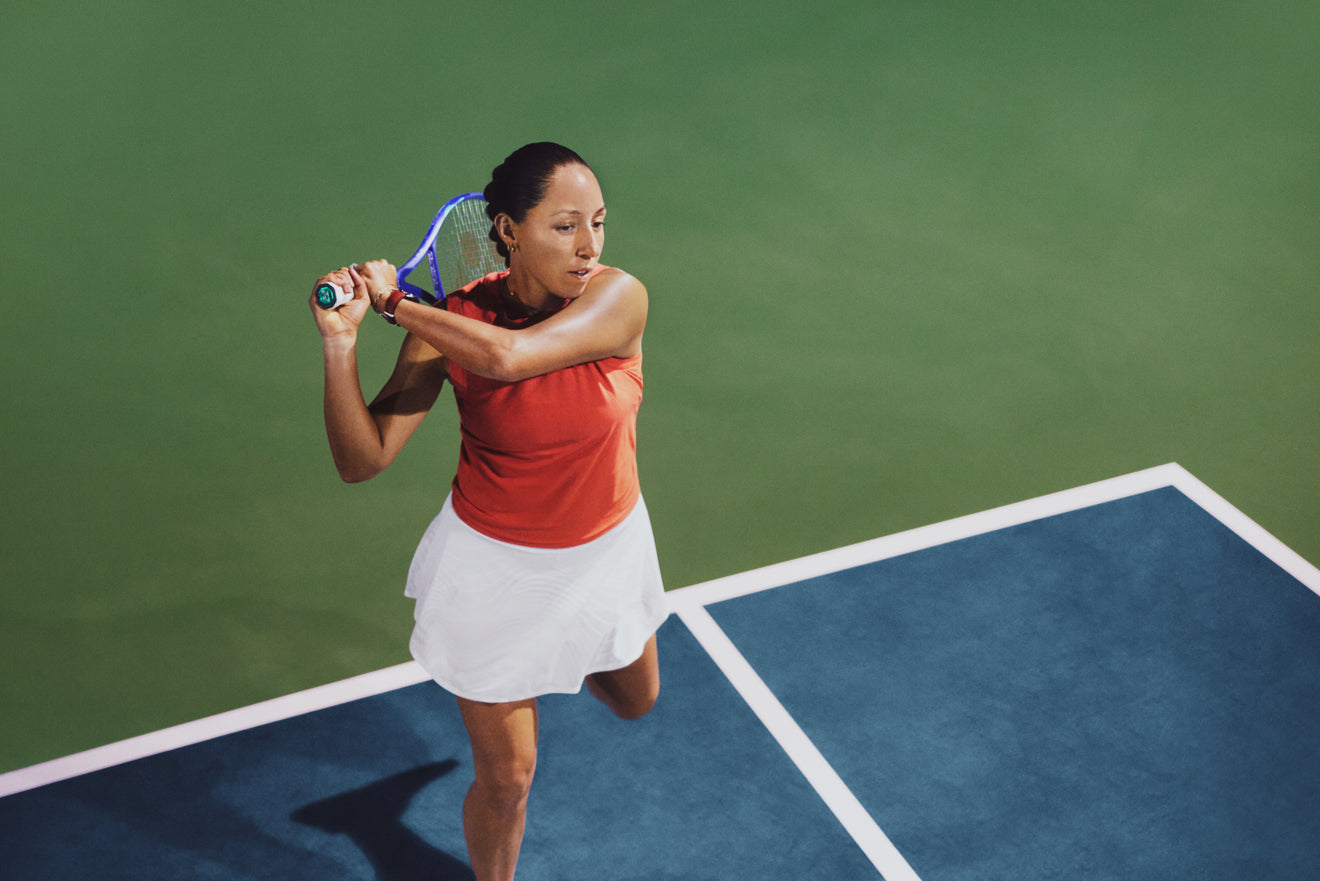
With attendance surging from the moment the gates opened, the Australian Open once again delivered a high-energy start to the season. Across the tournament’s opening week, players from around the world took to Melbourne Park’s sky-blue courts, producing memorable performances under the summer sun.
Yonex-supported athletes were well represented throughout the draw. Thirty contracted players featured in the men’s field—tied for the highest total among racquet brands—while 40 appeared on the women’s side. In total, 70 players competed using Yonex racquets, ranking the brand second overall at the tournament.
As the field narrowed to the final 16, nine players—four men and five women—remained in contention, reflecting the breadth and depth of the Yonex roster across playing styles, generations, and nationalities.
Keys vs. Pegula: Friends, Rivals, and a Bet on the Line
One of the most anticipated fourth-round encounters saw defending champion Madison Keys (USA) face close friend and fellow American Jessica Pegula. Competing at a major for the first time as defending champion, Keys acknowledged early nerves in her opening round, but quickly settled into form, advancing in straight sets to set up the clash.
Pegula arrived in equally sharp condition, conceding just 10 games across her first three matches. Known for her timing and tactical clarity, she dictated play with composure throughout the opening week.
Adding a lighthearted subplot, the two friends made a pre-match wager that caught fans’ attention. If Keys lost, she would have to eat Pegula’s favorite dessert—apple pie topped with cheese, a combination Keys openly detests. If Pegula lost, she would don a Kansas City Chiefs jersey. Their off-court chemistry became almost as talked-about as the match itself. In the end, it was Pegula who came out on top.
Different Playing Styles: Rybakina vs. Mertens
Another fourth-round meeting featured Elena Rybakina (KAZ) against Elise Mertens (BEL). Rybakina’s power from the baseline met Mertens’ variety and court craft, with Rybakina advancing.
A Rising Star: Iva Jovic
Eighteen-year-old Iva Jovic (USA) emerged as one of the tournament’s standout stories. Known for her aggressive instincts and evolving shot selection, Jovic delivered a commanding fourth-round performance against Yulia Putintseva (KAZ) winning 6-0, 6-1 to reach her first Grand Slam quarterfinal.
Long viewed as a player with significant potential, Jovic’s run in Melbourne marked a meaningful step forward on the sport’s biggest stage.
Shelton vs. Ruud: A Fourth-Round Highlight
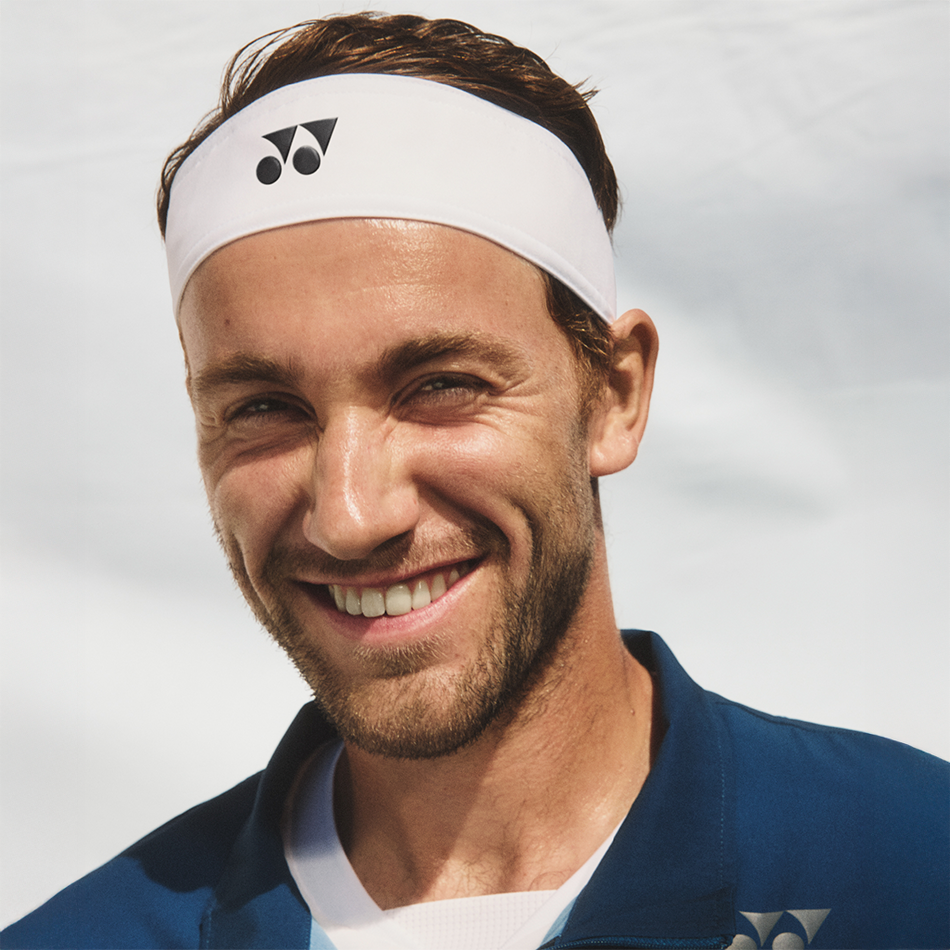
The walk down the tunnel to center court set the tone. Ben Shelton (USA) and Casper Ruud (NOR), Yonex bags slung over their shoulders, emerged for a marquee fourth-round clash. Both regulars in the second week of majors, they had cruised through the opening three rounds without dropping a set, a reflection of sharp off-season preparation. When it was over, Shelton had secured the win.
Breakthroughs and Consistency on the Men’s Side
Despite a fourth-round exit, Italian standout Luciano Darderi (ITA), born in Argentina, showed the same strong form that carried him to the fourth round of a Grand Slam for the first time in his career. After capturing three tour titles last season and breaking into the top 30, he has carried that momentum into the new year.
While Darderi marked a breakthrough, Tommy Paul (USA) delivered another steady run deep into the draw, reaching the second week of a major once again—his seventh since the 2023 Australian Open.
Valentin Vacherot (MON) energized the crowd in his second-round match against Ben Shelton, producing eye-catching returns against Shelton’s body serve and drawing loud reactions from the stands with his shotmaking.
Stan the Man’s Final Melbourne Chapter
Few moments stirred the emotion of Melbourne Park quite like Stan Wawrinka’s (SUI) return. The 2014 Australian Open champion arrived at age 40, knowing this would be his final appearance at the tournament after announcing that 2026 will mark his last season on tour.
Crowds gathered well before play began, eager for one last look at “Stan the Man.” Each strike of his signature one-handed backhand rippled through the stands, met by gasps and roars from a crowd fully aware of the occasion.
In the second round, Wawrinka battled past 21-year-old Arthur Géa (FRA) in a five-set thriller, 4-6, 6-3, 3-6, 7-5, 7-6. Though his run later came to an end against Taylor Fritz (USA), Wawrinka continued to produce moments of brilliance, absorbing a prolonged standing ovation from a packed stadium.
With hands forming a heart toward the crowd, he acknowledged a court filled with memories—of titles, battles, and a career that helped shape the modern era of the game.
As Wawrinka later reflected:
“I’m not doing the year just to say goodbye at tournaments. My mindset is still that of a competitor.” The Australian Open chapter may be closing—but the competitor’s story continues.
Yonex Leads the Way in the Junior Draws
As the first week unfolded, the junior events also got underway, offering an early look at the next generation of competitors on the Grand Slam stage.
Across boys’ and girls’ singles and doubles, 84 players in the junior draws competed using Yonex racquets, representing 33 percent of the field. Many of these athletes are taking their first steps in what could become long careers at the highest level of the sport.